
AI Strategy & Roadmapping
Identify high-impact AI opportunities, assess data readiness, and build a practical roadmap that aligns with production goals.

Manufacturing Focused. Technology Driven.
We help factories and industrial teams cut downtime, improve product quality, and make smarter decisions with practical AI and custom software.
End-to-end technology consulting built for the factory floor.
Identify high-impact AI opportunities, assess data readiness, and build a practical roadmap that aligns with production goals.
Design and deploy Industry 4.0 solutions: IoT data pipelines, real-time dashboards, and connected production ecosystems.
Bridge legacy machines and modern platforms with bespoke software, APIs, and integrations that fit your existing workflows.
Use machine learning to predict equipment failures, reduce scrap rates, and keep quality consistent across every batch.
Real projects we have delivered.
 INKA OVGU
Problem: Detecting different tissues during surgery through acoustic vibration requires large, diverse datasets. Manually palpating tissues at varying forces and angles is impractical.
Solution: Programmed a 6-degree-of-freedom Franka Emika robot to autonomously palpate tissue hundreds of times with controlled forces and angles, generating a rich, structured dataset.
Outcome: INKA OVGU used the generated data to train algorithms that can identify tissues during surgery, advancing safer, data-driven surgical guidance.
 INKA OVGU
Problem: Germany faces a shortage of healthcare professionals. Automating routine tasks can increase surgeon productivity, but a reliable assistant must understand commands, locate instruments, and hand them over safely.
Solution: Built a three-module system: a speech-recognition module to parse surgeon commands, a vision module to detect the correct surgical scissors and measure their distance from the robot, and a robot module to pick and hand over the instrument.
Outcome: A simulated surgery demonstrated the complete workflow, and the results were published in a research paper.
 Siemens Energy
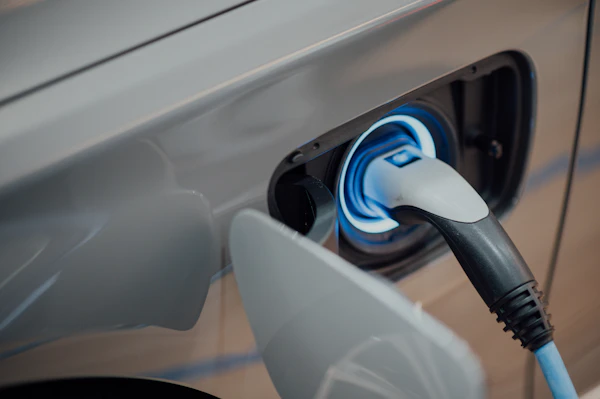
Problem: Siemens built a central management system for charging stations. Before going live, the system needed rigorous stress testing under realistic load conditions.
Solution: Built a simulator that replicates the behaviour of hundreds of charging stations. Testers can load behaviour files to simulate stations being used at different rates, enabling repeatable load and stress tests.
Outcome: Load-balancing algorithms were stress-tested and evaluated with the simulator. The tool was handed over to Siemens, and the work was published in a research paper.
 aRTE Möbel
Problem: The plant's PV and battery systems produced more energy than was consumed, sometimes feeding surplus back to the grid and increasing costs. There was also no way to prove products were made with zero-emission energy.
Solution: Built a signalling system that tells machines to increase production when solar generation is high, using air pumps and charging stations as flexible loads before resorting to battery storage. Tracked material flows and green energy use, then stored the green energy passport on a blockchain.
Outcome: Lower plant costs because generated energy is consumed on-site, plus verifiable green-energy certification for the products.
 Abel Bestattungen
Problem: The company generates a lot of green energy from its PV installation and also has battery capacity, an EV charging station, and an EV. Energy was not always fully consumed, and surplus was sometimes fed back to the grid, increasing costs.
Solution: Implemented intelligent control of an industrial refrigerator's temperature during energy excess and deficit periods. When more energy was produced, the surplus was used to charge the company EV, with battery storage as the last option after all consumption avenues were exhausted.
Outcome: Significantly reduced energy costs by maximizing on-site consumption of self-generated green energy.
 OVGU University
Problem: Our family, friends and loved ones have to travel to work or other places during odd times. We need assurance that they are travelling safe at all times and reached the destination.
Solution: We built a live tracking system, where the traveller can invite up to five family members to track the journey. There is also a SOS system that notifies both the family members and emergency services.
Outcome: The application was presented in the OVGU university where lot of students have tested this application.
Selected publications spanning robotic sensing, net-zero energy factories, blockchain traceability, and EV charging infrastructure. View Google Scholar profile →
 Sensors, 2023
Investigates how vibro-acoustic signals from instrument–tissue interactions can recover texture information lost in robot-assisted minimally invasive surgery. Using a robotic arm and continuous wavelet transform features, SVM and k-NN classifiers differentiated materials with up to 99.67% accuracy, even when palpation angle and velocity varied.
Read more → BLORIN 2022
Presents a cost-benefit analysis of integrating blockchain into a Net-Zero Energy Factory, using a German carpentry as a real-world case study. Evaluates the added value of distributed ledger technology for energy traceability and flexibility trading.
Read more →
PEDG 2022
Introduces OCSS, a simulation application for multiple EV charging stations that communicate via the Open Charge Point Protocol (OCPP). Supports testing of load management, grid integration, and interoperability before real-world deployment.
Read more → eGRID 2023
Explores how dairy processing systems can be designed as active Net-Zero Energy Factories. Combines technical modeling with economic analysis to assess German decarbonization pathways, renewable integration, and operational flexibility.
Read more → PowerTech 2023
Positions Net-Zero Energy Factories as active participants in grid decarbonization. Proposes a blockchain application to coordinate energy flexibility and enable transparent, secure transactions among industrial prosumers.
Read more → eGRID 2023
Applies reinforcement learning to optimize flexibility exploitation inside a Net-Zero Energy Factory. The learned control policies schedule and shift energy consumption to lower costs while supporting grid stability.
Read more → EEEIC 2023
Designs a digital architecture for blockchain-based traceability within a Net-Zero Energy Factory, using a German carpentry as the case study. Defines data flows, system integration, and verifiable tracking of energy and flexibility transactions.
Read more → AEIT 2022
Describes the design of a flexibility hub for the MESH4U Net-Zero Energy Factory demonstrator. Aggregates and orchestrates distributed energy resources to provide grid services and improve factory-level economics.
Read more →Meet the co-founders behind Sandeep & Pankaj.

Co-founder
Scientist at Fraunhofer Institute Germany. M.Sc in Digital Engineering at OVGU university.

Co-founder
Serial entrepreneur, trader, M.Sc in Digital Engineering at OVGU university.
Tell us what you are trying to improve. We will reply within one business day.